Best Isopods for a Clean-Up Crew (Geckos, Frogs & Tarantulas)
By Kernow Isopods · Truro, Cornwall
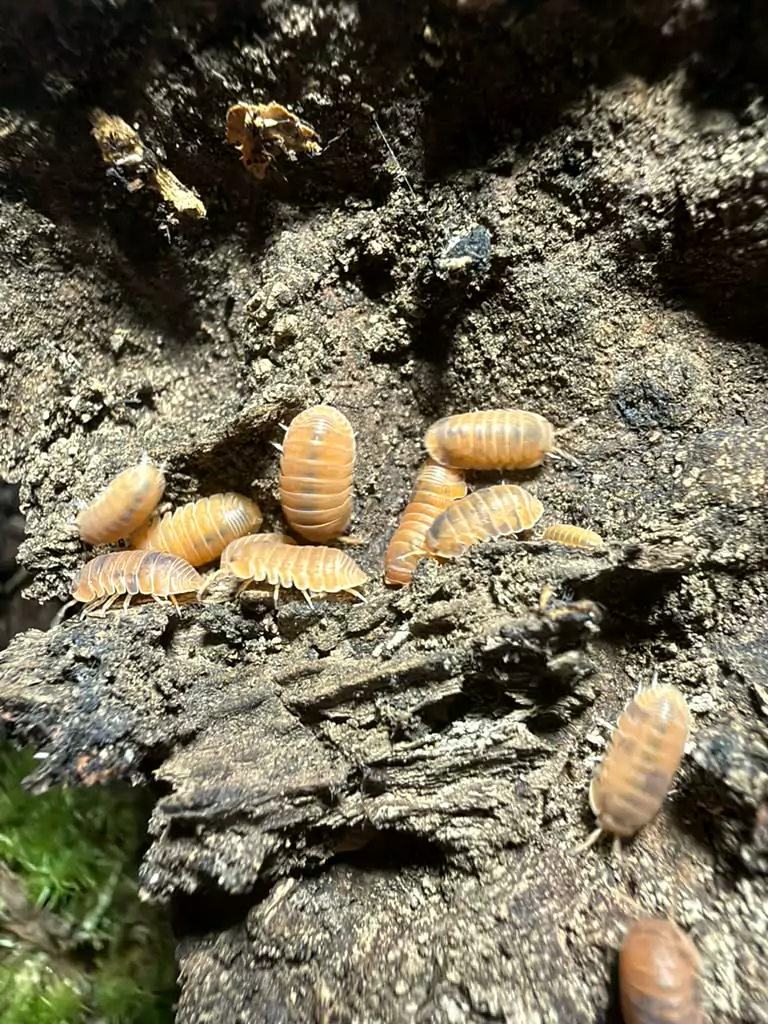
A clean-up crew (CUC) of isopods turns a vivarium into a living, self-cleaning ecosystem. They eat waste, shed skin, mould and leftover food, and keep the substrate aerated and healthy. But not every isopod suits every setup.
Why use isopods?
- They break down poo and uneaten insects before they smell or go mouldy.
- They keep mould in check on wood and leaves.
- They aerate the soil, so your plants grow better.
- Fewer full substrate changes, and a more natural enclosure.
Tropical & humid setups
Crested geckos, dart frogs, tree frogs, tropical tarantulas. These need isopods that love warmth and humidity and breed steadily. Our top pick is Mandarin Cubaris murina: small, hardy, fast-breeding and bright orange so you can actually spot them. Dwarf species and springtails are also great alongside them.
Drier & arid-ish setups
Leopard geckos, bearded dragons (with a damp corner), desert tarantulas. Fully arid tanks are tough for any isopod, but hardy Armadillidium like Magic Potion cope well as long as there's a permanently damp hide or moss patch they can retreat to.
Temperate / room temperature
For unheated setups and many tarantula enclosures, Magic Potion is very hardy and tolerates a wide temperature range.
How to add a clean-up crew
- Set up the bioactive substrate first, with leaf litter and a moist area.
- Add 10–20 isopods for a typical vivarium, along with springtails if you have them.
- Give them a couple of weeks to settle before relying on them.
- Keep leaf litter topped up so they don't run out of food.
Will my reptile eat them?
Some will, especially insectivores. A well-stocked colony with plenty of hiding places under bark and leaves will keep breeding faster than it gets eaten. Avoid very large isopod species with small, delicate animals.