Cubaris Care Guide: Panda King, White Shark, Amethyst & More
By Kernow Isopods · Truro, Cornwall
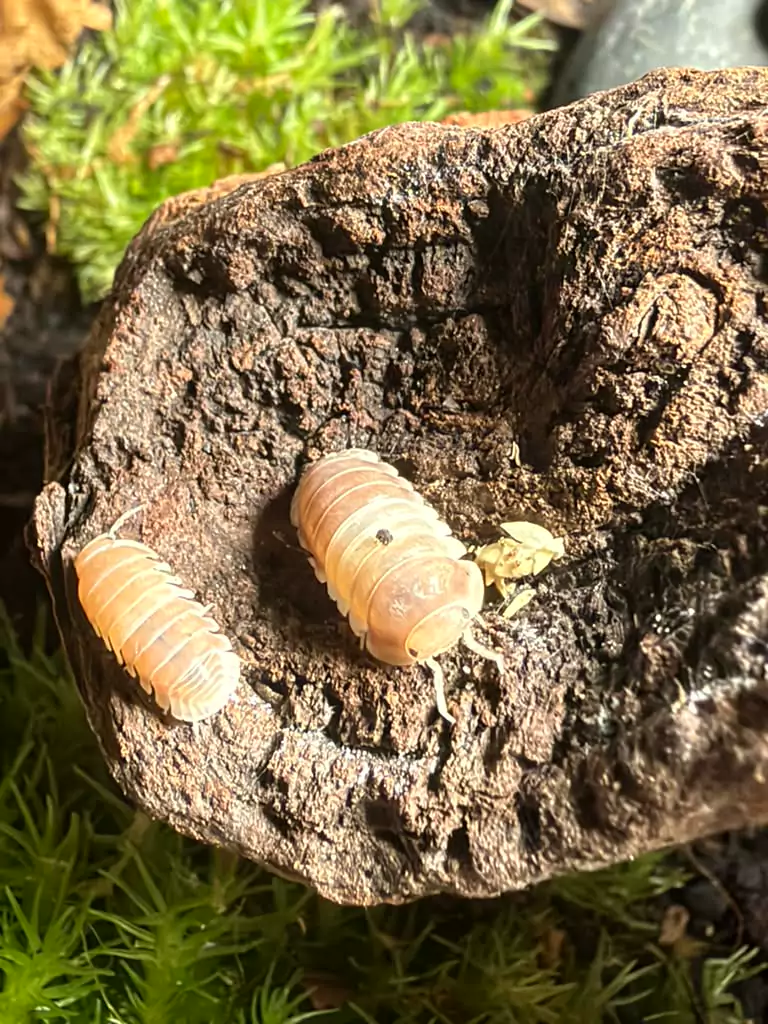
Cubaris are the stars of the isopod hobby: small, colourful, and full of named morphs like Pink Panda, White Shark, Amethyst and Latte. Most share the same basic needs, so once you've got one Cubaris thriving, you can keep the rest.
The Cubaris recipe
- Warmth: around 22–26 °C. In a UK house that often means a small heat mat under one end in winter.
- Humidity gradient: one end damp with moss, the other drier.
- Ventilation: plenty of small vents. Humid and fresh is the goal.
- Hides: cork bark flats and hollows. Cubaris love to cluster underneath.
- Food: leaf litter, rotten hardwood, cuttlebone, and protein once a week.
Beginner to advanced
If you're new to Cubaris, start with Mandarin (Cubaris murina), then try the Panda King family such as Pink Panda, White Panda and Red Panda. Next come the colourful mid-range lines like Latte, Caramel Cream and Amethyst. Save the trickier ones like White Shark and Blind Saturn for when you're confident.
Why Cubaris die (and how to avoid it)
- Drying out: the damp side must never fully dry.
- Stagnant air: sealed tubs build up bad air. Add more vents.
- Too cold: below about 20 °C they slow down and stop breeding.
- Over-handling: they're best left in peace.
Breeding
Most Cubaris breed slowly compared with common pill bugs. Stable warmth, steady humidity and a good protein supply make the biggest difference. Split colonies once tubs get crowded so they keep growing.
Browse all our Cubaris species, each with its own data sheet.