Rubber Ducky Isopod Care Guide (Cubaris sp. "Rubber Ducky")
By Kernow Isopods · Truro, Cornwall
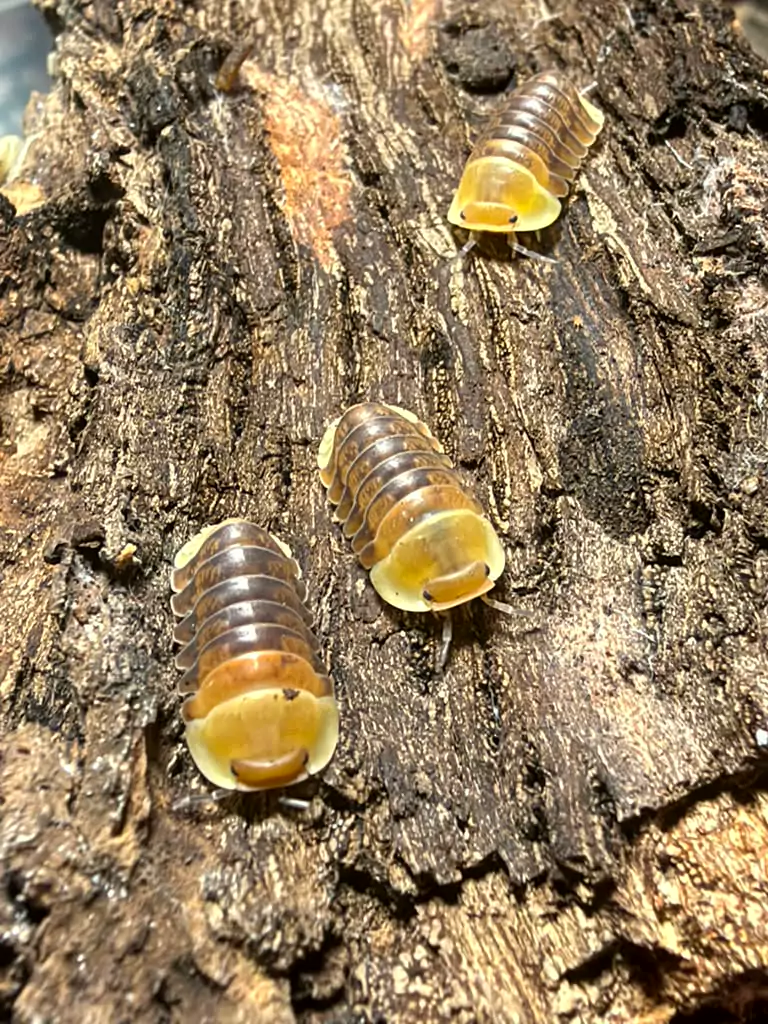
The Rubber Ducky is the isopod that made the hobby famous, with its bright yellow "face" and bath-toy look. They're not difficult, but they're less forgiving than beginner species, and colonies grow slowly. Here's what works for us.
Quick facts
- Size: up to about 1.5 cm
- Temperature: 22–26 °C
- Humidity: high, with a drier end
- Breeding: slow
- Difficulty: moderate (3/5)
Enclosure
A small tub (1.5–5 litres) is plenty for a starter group. Rubber Duckies like stable conditions more than space. Give them good cross-ventilation: stuffy, stagnant tubs are the most common reason Duckies are lost.
Substrate & moisture
Use a rich organic mix (topsoil, coco fibre, crushed leaf litter and rotten hardwood) about 5 cm deep. Keep one end damp with a thick pad of sphagnum moss and let the other end stay drier. Mist the damp side when it starts to dry out, never the whole tub.
Food
Leaf litter and decaying wood are the staple. Add cuttlebone for calcium and a small pinch of protein (fish flakes or dried shrimp) once a week. They also enjoy a little squash or carrot, but remove it before it moulds.
Breeding tips
- Leave them alone: frequent disturbance slows breeding.
- Keep temperatures steady in the low-to-mid 20s. In UK winters a small heat mat on one side of the tub helps.
- Moss and stable humidity help successful moulting, which comes before breeding.
- Expect it to take months for a colony to build. Patience pays off.
Common problems
- Deaths after a move: usually stress plus poor ventilation. Increase airflow.
- Mould: too wet with too little air. Let the dry side dry out properly.
- No babies: too cold, too much disturbance, or the group is too young. Give it time.