What Do Isopods Eat? A Complete Feeding Guide (UK)
By Kernow Isopods · Truro, Cornwall
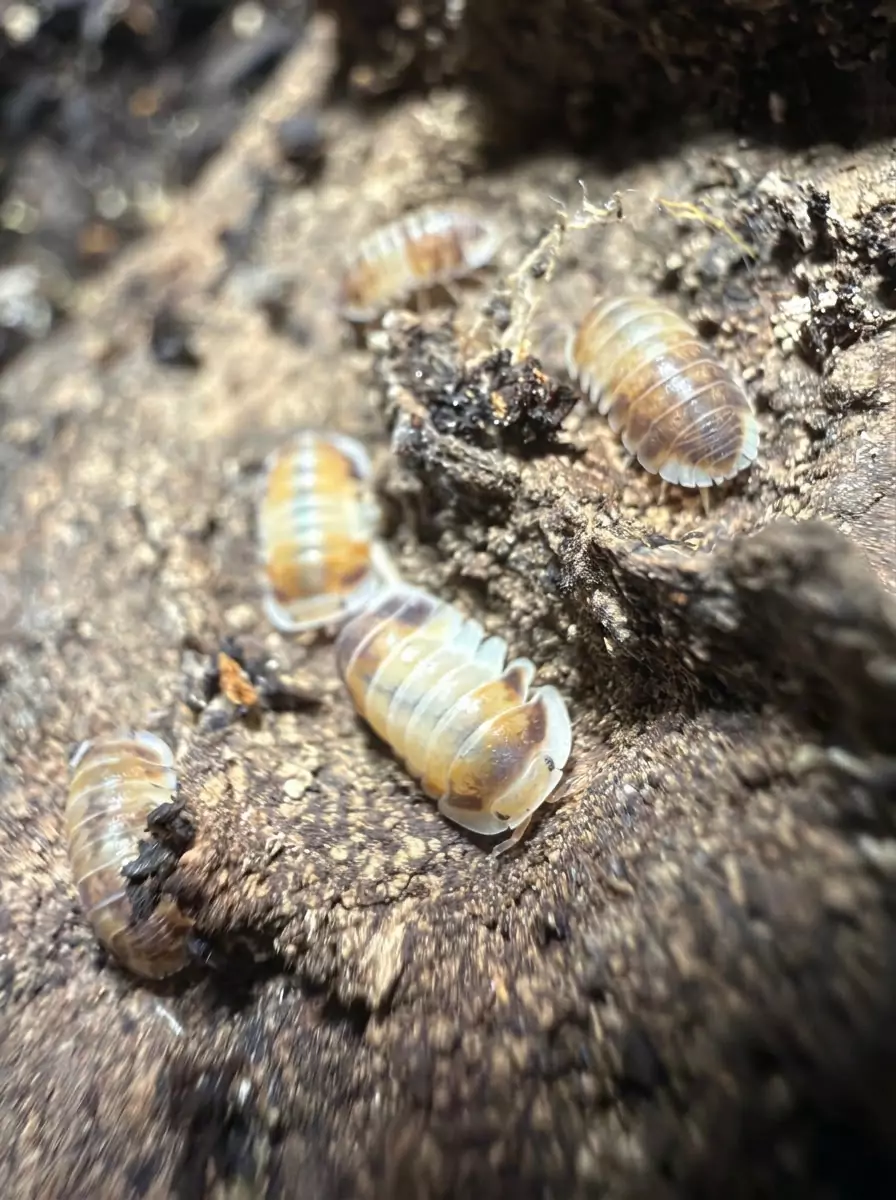
Isopods are nature's recyclers, so most of what they need is free: dead leaves and rotting wood. Get those right, add calcium and a little protein, and almost any species will thrive and breed. Here's exactly how we feed our colonies in Cornwall.
The staple: leaf litter
Dead, dry hardwood leaves are the most important food in any isopod tub. They eat them, hide under them and raise their young in them. Keep a thick layer on top of the substrate at all times and top it up as it disappears.
- Best leaves: oak, beech, hornbeam and hazel. Oak and beech last longest and are the safest all-rounders.
- Collect brown, dry leaves that have fallen naturally, away from roads and sprayed fields.
- Bake at about 100 °C for 20 minutes (or freeze for 48 hours) to kill mites and other hitchhikers.
- Avoid evergreen and conifer leaves, laurel, yew and anything you can't identify.
Rotting hardwood
Soft, white-rotted hardwood is the second staple. Many species, especially Cubaris, graze the fungus on it, and the babies rely on it. A piece of rotten oak or beech you can crumble with your fingers is perfect. Bake or freeze it like leaves, then bury a piece in the substrate and lay another on top.
Calcium
Isopods are crustaceans and need calcium to moult their shells. Without it, moults fail and colonies stall.
- Cuttlebone is the easiest: keep a piece on the surface permanently.
- Crushed eggshell (baked) and limestone or chalk chips also work.
Protein (once a week)
A small pinch of protein boosts breeding, especially in Cubaris, and stops colonies turning on their own moults. Too much goes mouldy, so little and often is best.
- Fish flakes, dried shrimp, dried mealworms or dried daphnia.
- Freeze-dried insects or a little high-protein fish food.
- Remove anything that hasn't gone in two or three days.
Fresh food treats
Fresh food is optional, but most species love it. Offer a small piece once or twice a week and remove leftovers before they go mouldy.
- Good: carrot, courgette, cucumber, squash, sweet potato, apple, pear, banana (sparingly).
- Avoid: citrus, onion, garlic, anything salty, seasoned or cooked in oil.
- Wash fruit and veg well, or use organic, to avoid pesticide residue.
How much and how often?
A healthy tub always has leaf litter and wood available, so they're never truly hungry. On top of that, a weekly pinch of protein and the odd piece of veg is plenty for a starter culture. If food disappears overnight, the colony is growing: add more leaf litter and think about splitting the tub.
Quick checklist
- Thick layer of baked oak or beech leaves, always.
- Rotten hardwood buried and on top.
- Cuttlebone on the surface.
- A pinch of protein once a week.
- Fresh veg as an occasional treat; remove leftovers.
New to isopods? Start with our guide to starting an isopod colony, or browse our beginner isopods.
More guides
- How to Start an Isopod Colony (UK Beginner's Guide)
- Best Isopods for a Clean-Up Crew (Geckos, Frogs & Tarantulas)
- Rubber Ducky Isopod Care Guide (Cubaris sp. "Rubber Ducky")
- Cubaris Care Guide: Panda King, White Shark, Amethyst & More
- Pink Dragon Millipede Care Guide (Desmoxytes planata)
- Why Are My Isopods Dying? 8 Common Causes and Fixes
- Your Isopods Have Arrived: Unboxing and Settling In