Isopod Substrate and Leaf Litter: A Practical UK Guide
By Alex · Kernow Isopods, Truro, Cornwall · Published 1 November 2026
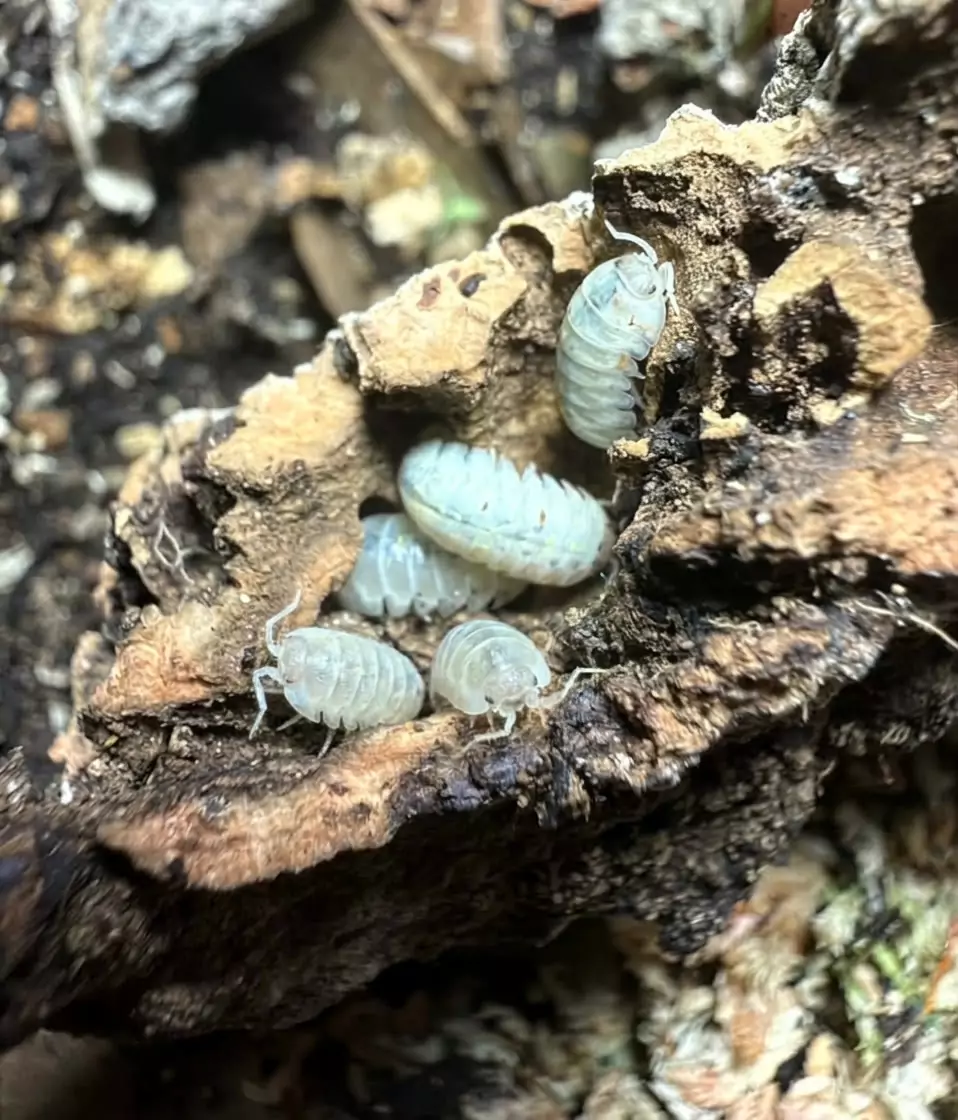
For isopods, substrate and fallen leaves are part of the habitat and part of the menu. The useful goal is a nutritious base, plenty of leaf litter and a moisture gradient — not one magic recipe.
Build a useful substrate
Start with an organic, unfertilised soil or compost base. Mix in broken-down hardwood and some crushed, dried hardwood leaves. The substrate should hold moisture without becoming waterlogged, and be deep enough to create a stable damp area for burrowing and moulting. Avoid mixes with added fertiliser, pesticides or wetting agents.
Coco fibre can help with structure and moisture retention, but it is not a complete food source on its own. Keep decaying hardwood and leaf litter available above and within the substrate. For a full beginner set-up, see how to start a colony.
Give them a choice of moisture
Moisten one end of the tub and provide a sheltered, drier area at the other. Check the substrate itself rather than relying on a humidity number: the refuge should stay damp, while the whole tub should not be soggy. Ventilation matters alongside moisture. Different species need different balances, so check the care notes on each species page.
Which leaves work?
Use dry, naturally fallen leaves from identifiable, unsprayed deciduous trees. Oak and beech are common choices. A generous layer gives isopods cover and a slow, continuous food supply; top it up as it disappears. Avoid leaves from roadsides or places that may have been treated with pesticides, and skip unknown or mouldy material.
Preparing collected leaves
Shake out visible hitchhikers and make sure the leaves are fully dry before storage. Some keepers heat-treat collected litter to reduce unwanted organisms; this does not remove chemical residues. We do not recommend a single time-and-temperature method for every leaf or oven. If the collection site is uncertain, use a trusted untreated leaf-litter supplier instead.
When to refresh the tub
Replace the leaf layer as it is eaten and add decaying wood when needed. Check for sour smells, standing water or widespread mould: those are reasons to review moisture, airflow and feeding, not simply to add more food. See our troubleshooting guide if a colony is struggling.
Quick answers
Is coco fibre enough? No. It can be part of a mix, but add leaves and decaying wood as food.
Must every leaf be sterilised? There is no universal rule. Careful sourcing is essential; heat treatment may reduce hitchhikers but cannot make contaminated leaves safe.
How often should I add leaves? Keep a layer available and top it up as the colony consumes it.
Further reading: Isopods.co.uk care guide and Micro Exotics’ Vex data sheet.
More guides
- How to Start an Isopod Colony (UK Beginner's Guide)
- Best Isopods for a Clean-Up Crew (Geckos & Frogs)
- Rubber Ducky Isopod Care Guide (Cubaris sp. "Rubber Ducky")
- Cubaris Care Guide: Panda King, White Shark, Amethyst & More
- Pink Dragon Millipede Care Guide (Desmoxytes planata)
- What Do Isopods Eat? A Complete Feeding Guide (UK)
- Why Are My Isopods Dying? 8 Common Causes and Fixes
- Your Isopods Have Arrived: Unboxing and Settling In