 In stock
Troglodillo Isopods for Sale UK
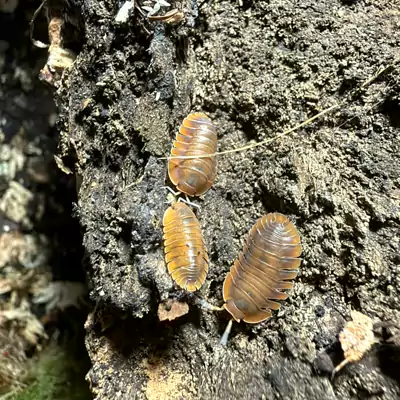
Troglodillo are tropical isopods from South-East Asia that are popular with collectors who like a quieter, slower species. Our Vex (Troglodillo sp. "Vex") is captive-bred, never wild-caught, and kept in Truro, Cornwall.
Treat them like a careful Cubaris: warmth around 22–26 °C, good airflow, deep substrate with plenty of leaf litter and rotting wood, and a dependable damp refuge alongside a drier, covered area so they can choose. They breed slowly, so colonies build gradually and need patience. Vex is a trade name for an undescribed line, so we list it as Troglodillo sp.
Captive-bred, never wild-caught · tracked courier aiming for next-day delivery, Mon–Wed dispatch · Live Arrival Guarantee
In stockTroglodillo care at a glance
Vex reaches about 1.5–2 cm, comes from Southeast Asia and is rated harder (4/5), so it suits keepers with some experience. Keep it at 22–26 °C and stable. A clear tub of about 3–10 litres with small vents on opposite sides gives the good airflow it needs. Use deep organic substrate with decaying hardwood and a generous layer of leaf litter, bark crevices for cover, a dependable damp refuge such as sphagnum moss under bark, and a drier, covered area to move to. Our Vex care guide has the full set-up.
Questions
Are Troglodillo good for beginners?
Not usually. They are slower breeders and like stable conditions, so most keepers start with a hardy species first and move on to Troglodillo once they are comfortable.
What conditions do Troglodillo need?
Aim for 22–26 °C with good ventilation, deep substrate, and a moisture gradient: one damp end and one drier end. Avoid letting the whole tub dry out or sit soaking wet.
How fast do they breed?
Slowly. Expect a colony to take time to establish, and avoid disturbing the tub more than you need to.
What do Vex isopods eat?
Leaf litter and decaying hardwood, always available. Offer a calcium source such as cuttlebone, and a small pinch of protein once a week.
Why can I never see my Vex?
That is normal. Vex stays tucked under bark and leaf litter. Resist the urge to dig for them: look under the bark and leaf litter instead, and avoid frequent disturbance.
How big do Vex get and where are they from?
Adults reach about 1.5–2 cm. Vex is listed as coming from Southeast Asia, and it is a trade name for an undescribed Troglodillo line.