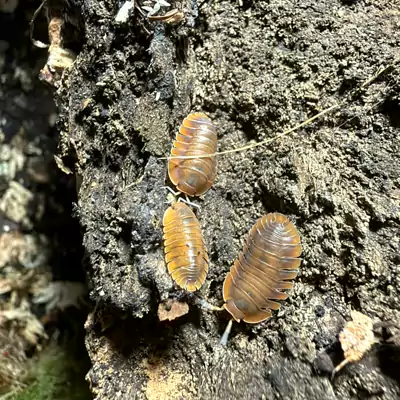
 In stock
Vex Isopod Care Guide (Troglodillo sp.)
By Alex · Kernow Isopods, Truro, Cornwall · Published 10 November 2026
New to isopods? Start here: Best isopods for beginners · Isopod starter kit UK
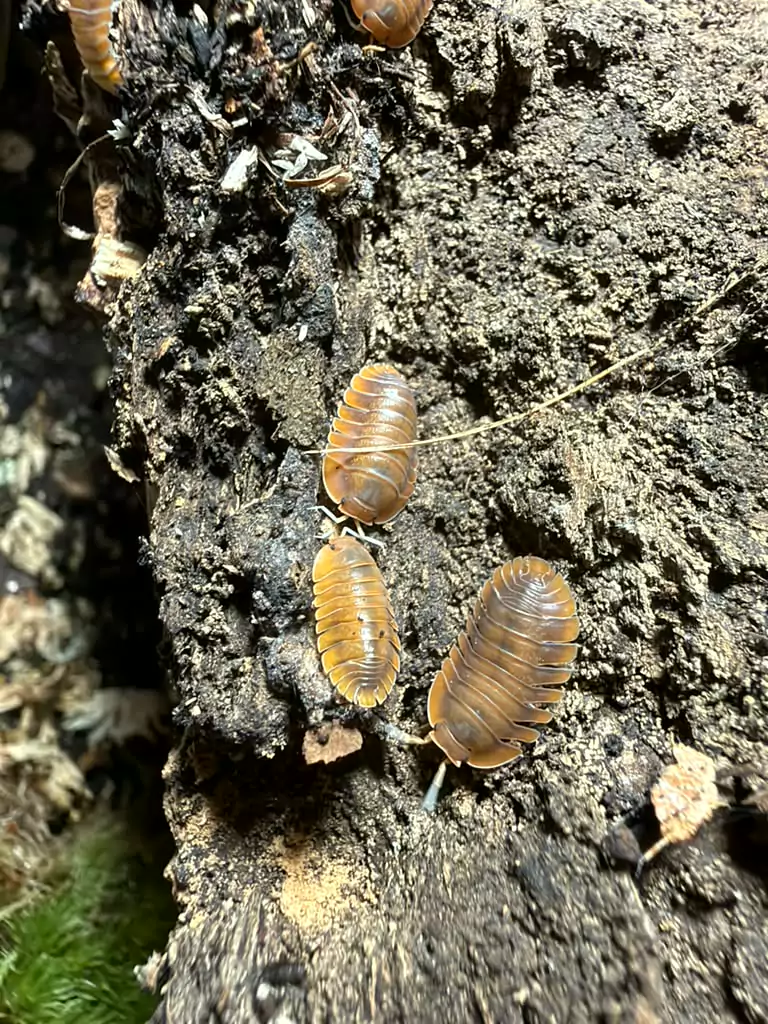
Vex is a striking Troglodillo for collectors who enjoy a quieter species. It tends to stay tucked under bark and leaf litter, which makes each sighting a treat. It is a slower, less forgiving species, so it suits keepers with some experience. Here is how we keep Vex isopods in Cornwall.
Quick facts
- Size: about 1.5–2 cm
- Origin: Southeast Asia
- Temperature: 22–26 °C
- Humidity: a dependable damp refuge and a drier, covered area
- Difficulty: harder (4/5)
- Breeding: slow
Vex is listed on our Troglodillo page and in the rare isopods range. Allow space and time for a colony to establish.
Enclosure and airflow
A clear plastic tub of about 3–10 litres suits a starter culture. Provide good airflow throughout, with several small vents on opposite sides of the tub.
Substrate and moisture
Use deep organic substrate, decaying hardwood and a generous layer of leaf litter, with bark crevices for cover. Give Vex a dependable damp refuge, such as sphagnum moss under bark, and a drier, covered area to move to. Check the refuge every few days and keep it damp. Our substrate and leaf litter guide explains how to build a useful moisture gradient.
Temperature
Aim for 22–26 °C and keep conditions stable. In a cool UK house a small thermostat-controlled heat mat on one side of the tub is the usual fix, as we describe in the Cubaris guide. Keep tubs off radiators and out of direct sun.
Food
- Staple: leaf litter and decaying hardwood, always available.
- Calcium: offer a calcium source such as cuttlebone.
- Protein: a small pinch once a week.
Our feeding guide has the full list.
Breeding and disturbance
Breeding can be slower than with beginner species. Keep conditions stable and avoid frequent disturbance. Because Vex hides, resist the urge to dig for them: look under the bark and leaf litter instead.
Common problems
- Never seeing them: normal. Vex stays tucked under bark and leaf litter.
- Sudden losses: check airflow first, then moisture, then temperature.
- Dried-out refuge: re-wet the moss and substrate at the damp end.
If a colony struggles, work through why isopods die. See also the unboxing and settling-in guide and our shipping page.
Buy Vex isopods captive-bred from Kernow
In stockMore guides
- How to Start an Isopod Colony (UK Beginner's Guide)
- Best Isopods for a Clean-Up Crew (Geckos & Frogs)
- Rubber Ducky Isopod Care Guide (Cubaris sp. "Rubber Ducky")
- Cubaris Care Guide: Panda King, White Shark, Amethyst & More
- Pink Dragon Millipede Care Guide (Desmoxytes planata)
- What Do Isopods Eat? A Complete Feeding Guide (UK)
- Why Are My Isopods Dying? 8 Common Causes and Fixes
- Your Isopods Have Arrived: Unboxing and Settling In
- Isopod Substrate and Leaf Litter: A Practical UK Guide
- Panda Isopod Care Guide: Pink, White and Red Panda
- Magic Potion Isopod Care Guide (Armadillidium vulgare)
- White Shark Isopod Care Guide (Cubaris sp.)
- Cubaris murina Care Guide: Anemone and Glacier Isopods
- Zebra Isopod Care Guide (Armadillidium maculatum)
- Pineapple Isopod Care Guide (C. muricatum)
- Nesodillo Care Guide: Shiro Utsuri and Purple Ghost
- Best Isopods for Beginners: 5 Easy Species (UK)
- Isopod Starter Kit UK: What You Need for a First Tub
- How Many Isopods to Start With (and for a Bioactive Tank)
- Best Isopods for a Bioactive Vivarium (UK Picks)
- Isopod Humidity and Ventilation: Moist Side, Dry Side
- How to Set Up an Isopod Enclosure, Step by Step