 In stock
Best Isopods for a Bioactive Vivarium (UK Picks)
By Alex · Kernow Isopods, Truro, Cornwall · Published 18 November 2026
New to isopods? Start here: Best isopods for beginners · Isopod starter kit UK
The best isopods for a bioactive vivarium are the ones that suit the enclosure, not the ones that look best in a photo. A tropical rainforest tank, a room-temperature set-up and a semi-arid build each need a different clean up crew. This guide picks isopods by enclosure type. All our isopods are captive-bred, never wild-caught.
If you want to know which animals tend to eat isopods, or what to do about tarantulas, start with our clean-up crew guide for geckos and frogs. This page is about matching the species to the tank.
What makes a good bioactive isopod?
- It suits the temperature and humidity of the tank. This matters more than anything else.
- It is hardy and breeds steadily, so the colony keeps up with what gets eaten.
- It is easy to spot, so you can check the crew is still there.
- It is not too large for small, delicate animals.
Warm, humid tanks: crested geckos, dart frogs, tree frogs
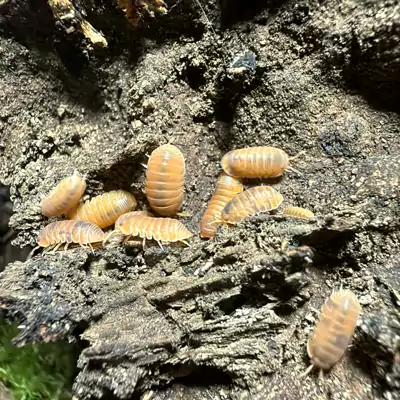
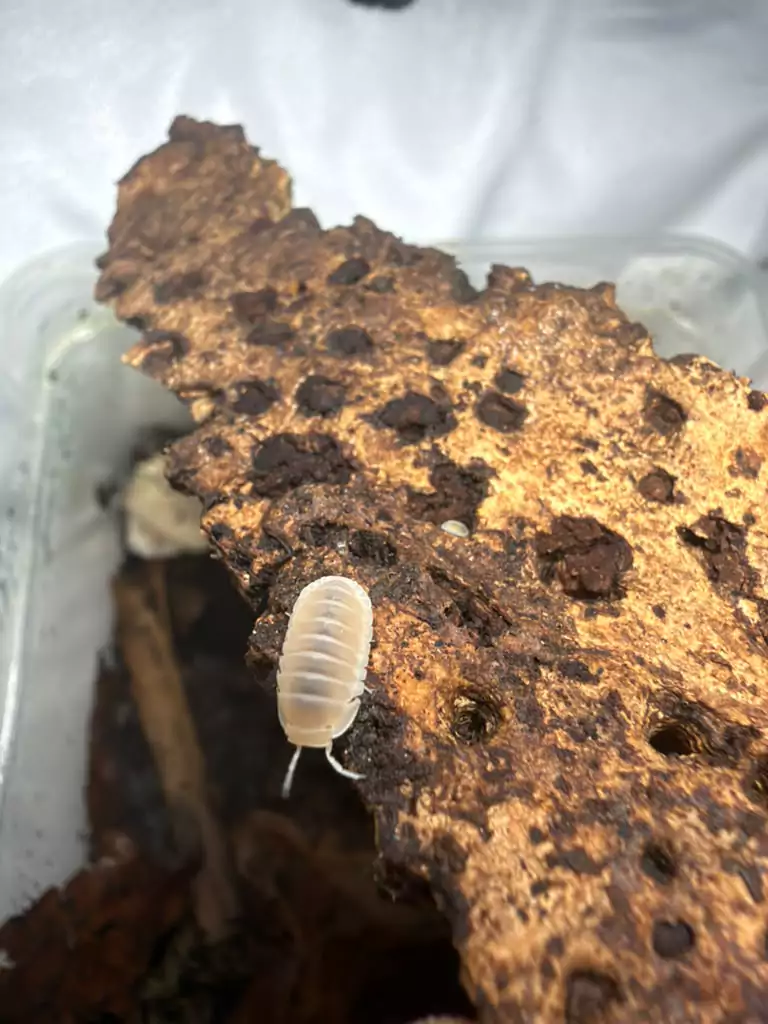
For warm, humid enclosures our top pick is Anemone (Cubaris murina): small, hardy, fast-breeding and bright orange. Glacier is a captive morph of the same species and gives you a paler alternative. Both are happiest at 22–26 °C, with a damp end and a drier end. Our Anemone and Glacier care guide has the details.
Room-temperature tanks
For unheated, suitably damp set-ups, Magic Potion is hardy and tolerates a wide temperature range, which makes it a good clean up crew isopod for a first unheated bioactive tank. Zebra and White Pearl are also happy at normal room temperatures, and like a drier tub than Cubaris.
Semi-arid tanks: leopard geckos and similar
Hardy Armadillidium such as Magic Potion or Zebra can work in semi-arid builds if there is a permanently damp hide of moss under cork bark. Keep a backup culture in a tub so you can top up what gets eaten.
Fully arid tanks
Fully arid tanks, such as bearded dragons and uromastyx, are the hardest place to keep any isopod alive, and we don't recommend our species for them.
A quick comparison
- Warm and humid: Anemone, Glacier
- Room temperature, damp refuge: Magic Potion, Zebra, White Pearl
- Semi-arid with a permanently damp hide: Magic Potion, Zebra
- Fully arid: not recommended
How to add them
Set up the bioactive substrate first, with leaf litter and a moist area. Add 10–20 isopods for a typical vivarium, along with springtails if you have them, and keep the leaf litter topped up so they don't run out of food. Our how many isopods to start with guide explains pack sizes, and the substrate and leaf litter guide covers the base layer. Moisture and airflow inside the tank follow the same rules as in a tub: see isopod humidity and ventilation.
New to all of this? Start with the best isopods for beginners, or see the clean-up crew isopods page and the species comparison.
Quick answers
What are the best isopods for a bioactive vivarium?
It depends on the enclosure. For warm, humid set-ups such as crested geckos and dart frogs, Anemone is our top pick. For room-temperature or drier set-ups, Magic Potion or Zebra are the hardy choices, as long as there is a permanently damp hide.
Which clean up crew isopods suit a UK home?
Hardy Armadillidium such as Magic Potion, Zebra and White Pearl are happy at normal room temperatures. Cubaris such as Anemone and Glacier want 22–26 °C, which in a cool UK house may mean a warm room.
Can I use isopods in a fully arid tank?
We don't recommend our species for fully arid tanks such as bearded dragon or uromastyx set-ups: it is the hardest place to keep any isopod alive.
How many isopods should I add to a bioactive tank?
10–20 is a good start for a typical vivarium, with leaf litter and a moist area already in place. Give them a couple of weeks to settle.
Buy bioactive-crew isopods captive-bred from Kernow
In stock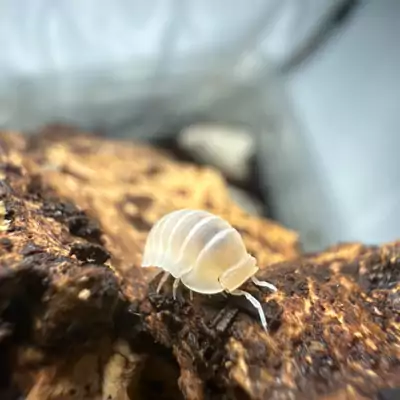 In stock
Glacier
Cubaris murina "Glacier"Easy care, level 2 of 5Singles from £2.49Packs of 5 from £8.99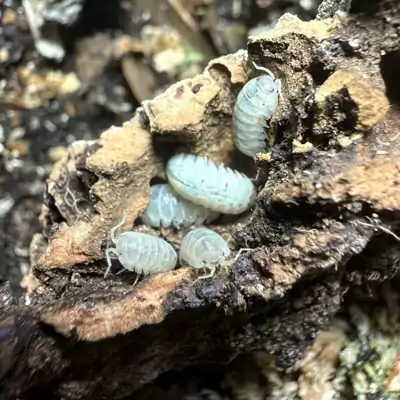 In stock
Magic Potion
Armadillidium vulgare "Magic Potion"Very easy care, level 1 of 5Pack of 5 from £8.99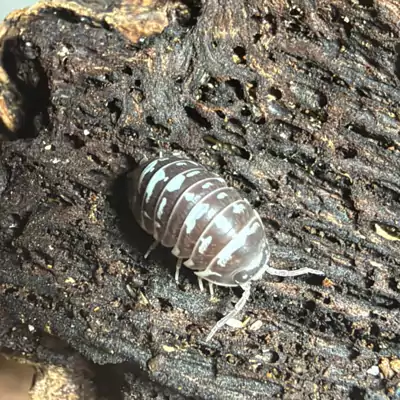 In stock
Zebra
Armadillidium maculatumEasy care, level 2 of 5Singles from £2.49Packs of 5 from £8.99More guides
- How to Start an Isopod Colony (UK Beginner's Guide)
- Best Isopods for a Clean-Up Crew (Geckos & Frogs)
- Rubber Ducky Isopod Care Guide (Cubaris sp. "Rubber Ducky")
- Cubaris Care Guide: Panda King, White Shark, Amethyst & More
- Pink Dragon Millipede Care Guide (Desmoxytes planata)
- What Do Isopods Eat? A Complete Feeding Guide (UK)
- Why Are My Isopods Dying? 8 Common Causes and Fixes
- Your Isopods Have Arrived: Unboxing and Settling In
- Isopod Substrate and Leaf Litter: A Practical UK Guide
- Panda Isopod Care Guide: Pink, White and Red Panda
- Magic Potion Isopod Care Guide (Armadillidium vulgare)
- White Shark Isopod Care Guide (Cubaris sp.)
- Cubaris murina Care Guide: Anemone and Glacier Isopods
- Zebra Isopod Care Guide (Armadillidium maculatum)
- Pineapple Isopod Care Guide (C. muricatum)
- Nesodillo Care Guide: Shiro Utsuri and Purple Ghost
- Vex Isopod Care Guide (Troglodillo sp.)
- Best Isopods for Beginners: 5 Easy Species (UK)
- Isopod Starter Kit UK: What You Need for a First Tub
- How Many Isopods to Start With (and for a Bioactive Tank)
- Isopod Humidity and Ventilation: Moist Side, Dry Side
- How to Set Up an Isopod Enclosure, Step by Step