 In stock
Cubaris murina Care Guide: Anemone and Glacier Isopods
By Alex · Kernow Isopods, Truro, Cornwall · Published 10 November 2026
New to isopods? Start here: Best isopods for beginners · Isopod starter kit UK
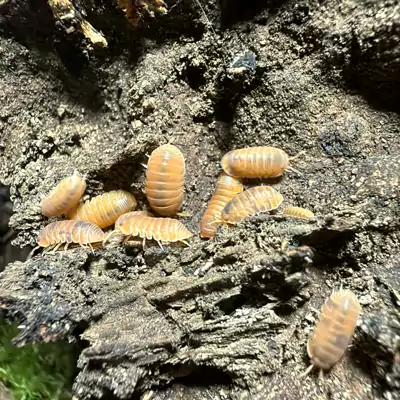
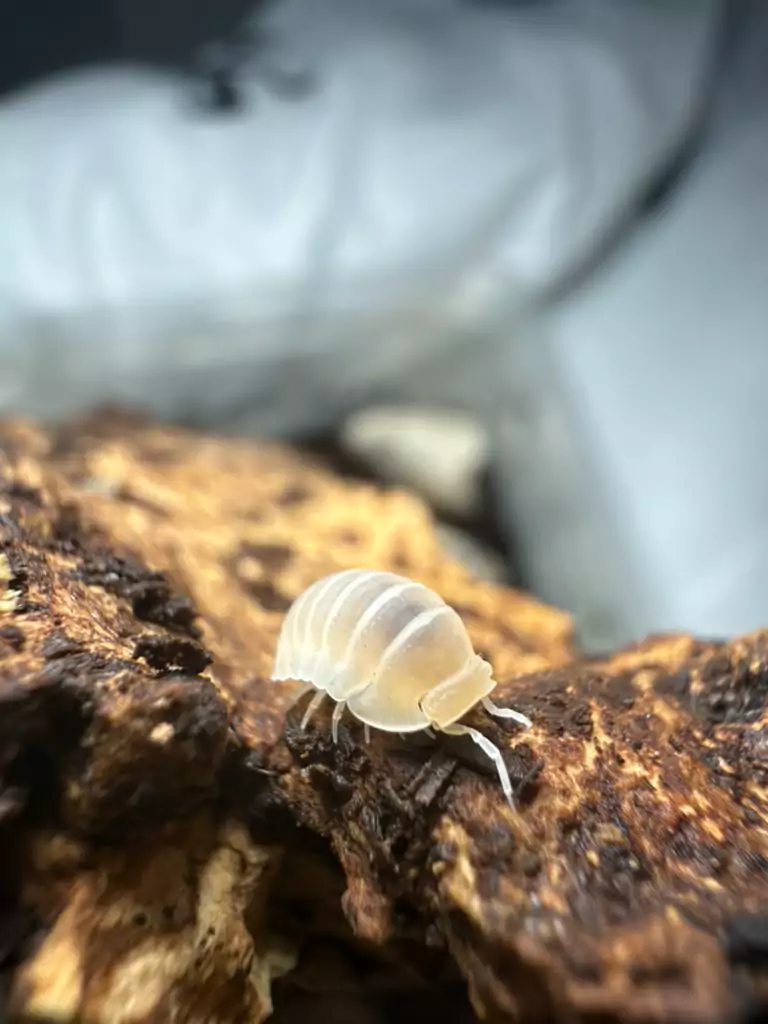
Cubaris murina is the classic starter Cubaris: small, hardy and quick to breed. We keep two morphs, the warm orange Anemone and the frosty white Glacier. Both are looked after in the same way, and this guide shows how we do it in Cornwall.
Quick facts
- Size: about 0.8–1 cm
- Origin: C. murina is widespread in the tropics, and Glacier is a captive morph of it
- Temperature: 22–26 °C
- Humidity: one damp end and one drier end
- Difficulty: easy (2/5)
- Breeding: fast
Both are part of the wider Cubaris group and are a good first step into it. You will also find them on our beginner isopods page.
Enclosure
A clear plastic tub of about 3–10 litres is perfect for a starter culture. Add small vents on two opposite sides so air can flow through. Humid and fresh is the goal: stagnant, steamy air causes losses in Cubaris even when the humidity looks right.
Substrate and moisture
Use a rich organic mix of unfertilised topsoil and coco fibre with crushed leaf litter and rotten hardwood, 5–8 cm deep. Keep one end damp with sphagnum moss and let the other end stay drier. Mist the damp side when it starts to dry, never the whole tub.
Temperature
Aim for 22–26 °C. In a UK house in winter that often means a small thermostat-controlled heat mat under or beside one end of the tub. Below about 20 °C they slow down and breeding may stop.
Food
Leaf litter and rotting hardwood are the staple, always available. Add cuttlebone for calcium and a small pinch of protein, such as fish flakes or dried shrimp, once a week. Offer a little squash or carrot if you like, and remove it before it moulds. The feeding guide has more.
Breeding
Anemone and Glacier breed quickly, so a colony builds faster than most Cubaris. Leave them in peace as far as you can. When the tub gets crowded, split it into a second tub, and keep the leaf litter topped up so food does not run out.
As a clean-up crew
Anemone is our top pick for a clean-up crew in tropical bioactive setups with crested geckos, dart frogs and tree frogs. It is small, hardy and fast-breeding, and the orange colour makes it easy to spot. Add 10–20 isopods for a typical vivarium, with leaf litter and a moist area already in place, and give them a couple of weeks to settle. We do not recommend our isopods for fully arid tanks, or as a default clean-up crew for tarantulas. The clean-up crew guide goes into detail, and our clean-up crew page lists the options.
Common problems
- Drying out: the damp side must never fully dry.
- Stagnant air: add more vents.
- Too cold: add gentle, thermostat-controlled warmth.
Once these are thriving, move on to the Panda isopods, then see how to start a colony if you want the full setup. Delivery terms are on our shipping page.
Buy Anemone and Glacier isopods captive-bred from Kernow
More guides
- How to Start an Isopod Colony (UK Beginner's Guide)
- Best Isopods for a Clean-Up Crew (Geckos & Frogs)
- Rubber Ducky Isopod Care Guide (Cubaris sp. "Rubber Ducky")
- Cubaris Care Guide: Panda King, White Shark, Amethyst & More
- Pink Dragon Millipede Care Guide (Desmoxytes planata)
- What Do Isopods Eat? A Complete Feeding Guide (UK)
- Why Are My Isopods Dying? 8 Common Causes and Fixes
- Your Isopods Have Arrived: Unboxing and Settling In
- Isopod Substrate and Leaf Litter: A Practical UK Guide
- Panda Isopod Care Guide: Pink, White and Red Panda
- Magic Potion Isopod Care Guide (Armadillidium vulgare)
- White Shark Isopod Care Guide (Cubaris sp.)
- Zebra Isopod Care Guide (Armadillidium maculatum)
- Pineapple Isopod Care Guide (C. muricatum)
- Nesodillo Care Guide: Shiro Utsuri and Purple Ghost
- Vex Isopod Care Guide (Troglodillo sp.)
- Best Isopods for Beginners: 5 Easy Species (UK)
- Isopod Starter Kit UK: What You Need for a First Tub
- How Many Isopods to Start With (and for a Bioactive Tank)
- Best Isopods for a Bioactive Vivarium (UK Picks)
- Isopod Humidity and Ventilation: Moist Side, Dry Side
- How to Set Up an Isopod Enclosure, Step by Step